Foundational Learning, Creativity and Culture in Early Childhood
(Acknowledged and welcomed with broad consensus during the 77th OMEP World Assembly, Bologna, Italy, July 2025, and formally adopted at the Extraordinary Virtual Assembly of OMEP on 29 November 2025.)
PREAMBLE
We, the members of the World Executive Committee of the World Organization for Early Childhood Education (OMEP), Presidents and delegates of National Committees, and representatives to the United Nations and UNESCO, gathered at the 77th OMEP World Assembly in Bologna, Italy, during the International Conference “Arts and Cultures in Early Childhood Education: Play, Expression, Participation,” painfully recognize that we are living in a historical moment of profound suffering, cruelty, and injustice towards childhood.
Across the world, countless girls and boys are suffering, losing their lives, or being displaced by war, violence, poverty, and humanitarian crises. As a global organization devoted to peace, children’s rights, and human dignity, OMEP feels this pain deeply. We hold all these children in our hearts and in our actions, sharing in their suffering and standing with those who strive to protect them.
We recall, with deep sorrow, the children in Gaza, where thousands of lives have been lost and humanitarian aid remains blocked; the children in Ukraine, enduring the trauma of prolonged conflict; and the millions of invisible children living under the constant threat of war, hunger, and displacement in more than fifty countries. Each of their lives calls us to act — for peace, for justice, and for the right of every child to grow, learn, and live in safety.
For more than seventy-five years, we have worked tirelessly to build peace through Early Childhood Care and Education (ECCE), promoting understanding, solidarity, and respect for human dignity from the very beginning of life. This Declaration arises as a renewed call for peace and the protection of childhood, reaffirming OMEP’s enduring commitment to human rights, equity, solidarity, and the construction of cultures of peace — grounded in the essential role of culture, language, and the arts in human development, identity, and learning from the earliest years as pathways to understanding, dialogue, coexistence, and peace.
BACKGROUND
Building upon these principles, this Declaration is issued within the framework of the 20th anniversary of the 2005 UNESCO Convention on the Protection and Promotion of the Diversity of Cultural Expressions and the 25th anniversary of International Mother Language Day, reaffirming the vital importance of cultures and languages – particularly Indigenous languages and cultural expressions – in human development, identity, and learning from the earliest years.
We recognize early childhood as a vital and foundational stage of life that demands public policies, pedagogical practices, and community participation based on the recognition of childhood as a living culture. Children are active subjects from birth — citizens, creators, and transformers of their worlds — with the right to play, express themselves, imagine, communicate, and create in their mother tongue, and to participate in the cultural life of their communities, giving meaning to their surroundings.
We reaffirm our commitment to the following international frameworks:
•SDG 4.2, which promotes universal access to quality early childhood care and education.
•The UN Convention on the Rights of the Child, especially Articles 28, 29, and 31, affirming the rights to education, culture, and play.
•The 2005 Convention on the Diversity of Cultural Expressions, linking education, creativity, and international cooperation for sustainable development.
•The Tashkent Declaration and Commitments to Action (2022), which positions Early Childhood Care and Education (ECCE) as a strategic pillar in transforming education systems from a human rights perspective.
•The Incheon Framework for Action (2015), which promotes lifelong learning beginning in early childhood.
In the face of adult-centric, technocratic, and school-oriented models that reduce early education to mere preparation for formal schooling, we call for the restoration and promotion of play, artistic expression, imagination, collective creation, and intergenerational dialogue as fundamental and inclusive forms of learning, coexistence, and meaning-making.
PRINCIPLES
OMEP declares that:
1.Foundational learning must be holistic, integrated, and meaningful, promoting the cognitive, emotional, social, creative, ethical, and cultural development of every child in safe, nurturing, and culturally rich environments.
2.Children are citizens from birth, protagonists of their own development, with the right to participate, create, express themselves, and be heard in their own languages and cultures.
3.It is essential to value the culture of childhood and move away from adult-centered approaches, recognizing the power and potential of early childhood as a time of intense creation, discovery, and social engagement.
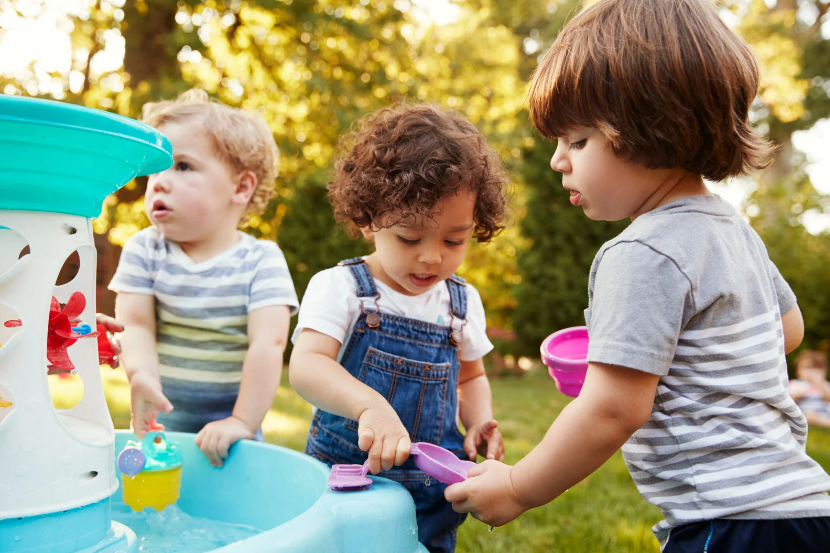
4.Play, imagination, storytelling, music, movement, and art are essential expressions of learning and should guide parenting, pedagogical practices, and experiences in early childhood settings.
5.Intergenerational dialogue and community knowledge must be promoted to enrich children’s learning and strengthen their sense of cultural belonging.
6.Pedagogical beliefs and practices must be rooted in human rights, cultural relevance, sustainability, and peace, affirming the centrality of the arts, language, and identity in the construction of meaning from the earliest years.
COMMITMENTS AND CALL TO ACTION
OMEP calls upon governments, international organizations, civil society, and all educational actors to:
1. Guarantee the right to quality early childhood education for all children
•Ensure inclusive, equitable, and culturally grounded early childhood care and education systems.
•Reject academic pressure, rigid school-readiness agendas, and standardized assessments in favor of diverse, playful, and creative learning experiences.
2. Integrate creativity, language, and culture as pillars of foundational learning
•Develop creative curricula and environments that promote artistic, linguistic, and cultural expression, fostering collaboration, empathy, and respect among all children.
•Promote the use of mother tongues and the inclusion of local cultures and community knowledge in early childhood education.
3. Advance pedagogical research, teacher professionalization, and international cooperation
•Promote the professionalization of early childhood educators, addressing the global shortage of qualified personnel and ensuring access to high-quality initial and ongoing teacher education, grounded in creative, inclusive, and culturally relevant pedagogies.
•Encourage reflective and innovative pedagogical practices through interregional and South–South cooperation and the exchange of knowledge and experience.
•Support pedagogical research, documentation of good practices, and the co-development of educational tools that strengthen foundational learning through play, creativity, and cultural expression.
4. Invest in the promotion and development of play and learning environments
•Ensure safe, inclusive, and culturally meaningful indoor and outdoor spaces that promote free play, movement, nature exploration, creativity, and social interaction from the earliest years.
•Allocate dedicated public funding and policy frameworks for the design, maintenance, and accessibility of high-quality early childhood play environments — including natural play areas, community play hubs, and toy libraries — prioritizing children in vulnerable and underserved contexts.
CONCLUSION
Through this Declaration, we reaffirm our unwavering commitment to peace, human rights, and early childhood education as a foundation for a just and sustainable future.
We are committed to act every day for the well-being, dignity, and happiness of all children, especially those who suffer the consequences of war, violence, poverty, and displacement — children to whom childhood itself is denied.
Our work and advocacy are inspired by them. They remind us that education must never stop, even in the most fragile or violent contexts. Every child, wherever they are, has the right to an education that protects life, restores hope, and offers opportunities to learn, imagine, and create — through their own language, their culture, their art, and their play.
We call on governments, international organizations, and all actors of society to act with urgency, coherence, and responsibility to make early childhood education a political, social, and ethical priority, and to fully recognize young children as citizens, creators, and bearers of living, diverse, and peaceful cultures.


